

4 Days in Northern Morocco: Casablanca to Chefchaouen Itinerary via Rabat, Meknes & Volubilis
A four-day trip through northern Morocco is an excellent choice if you want to combine imperial cities, Roman history, Atlantic scenery and the Rif Mountains without committing to the long driving days required for a Sahara itinerary. This route travels from Casablanca to Rabat, Meknes, Volubilis and Chefchaouen before returning to Casablanca.
If you are planning a 4-day trip through northern Morocco, the key is to keep the first two days well organized and give Chefchaouen enough time to enjoy at a slower pace. The itinerary below explains what to see, how the days fit together and what practical considerations can make the journey easier.
It is possible to arrange the route independently, although travelers who prefer door-to-door transportation can compare organized tours from Casablanca. For broader destination information before traveling, Morocco’s official tourism website also provides an introduction to modern Morocco and its culture.
4-Day Northern Morocco Itinerary at a Glance
| Day | Route | Main Experiences |
|---|---|---|
| Day 1 | Casablanca → Rabat → Meknes | Hassan II Mosque, Hassan Tower, Mohammed V Mausoleum, Kasbah of the Udayas and Meknes |
| Day 2 | Meknes → Volubilis → Chefchaouen | Roman ruins, mosaics, countryside and the Rif Mountains |
| Day 3 | Chefchaouen | Medina, Kasbah, Ras El Maa and Spanish Mosque viewpoint |
| Day 4 | Chefchaouen → Casablanca | Return journey and onward connections |
Why This 4-Day Northern Morocco Route Works
Morocco is larger and more geographically varied than a short trip can realistically cover. Trying to combine Casablanca, northern Morocco and the Sahara in only four days would mean spending much of the trip in transit. This itinerary instead concentrates on the northwestern corridor, where several major historical and cultural attractions can be combined efficiently.
In four days, the route gives you:
- The landmark Hassan II Mosque in Casablanca
- Historic monuments and Atlantic influences in Rabat
- The imperial heritage of Meknes
- Roman archaeology and mosaics at UNESCO-listed Volubilis
- A full day among the blue streets and mountain scenery of Chefchaouen
The pace is still active, particularly on Days 1 and 2. If four days feels too compressed, longer Casablanca-based options include a 4-day Casablanca route, 6-day route from Casablanca, 8-day Casablanca itinerary, 10-day route from Casablanca, 12-day Morocco itinerary from Casablanca and 14-day tour from Casablanca.
Day 1: Casablanca → Rabat → Meknes
Morning: Hassan II Mosque in Casablanca
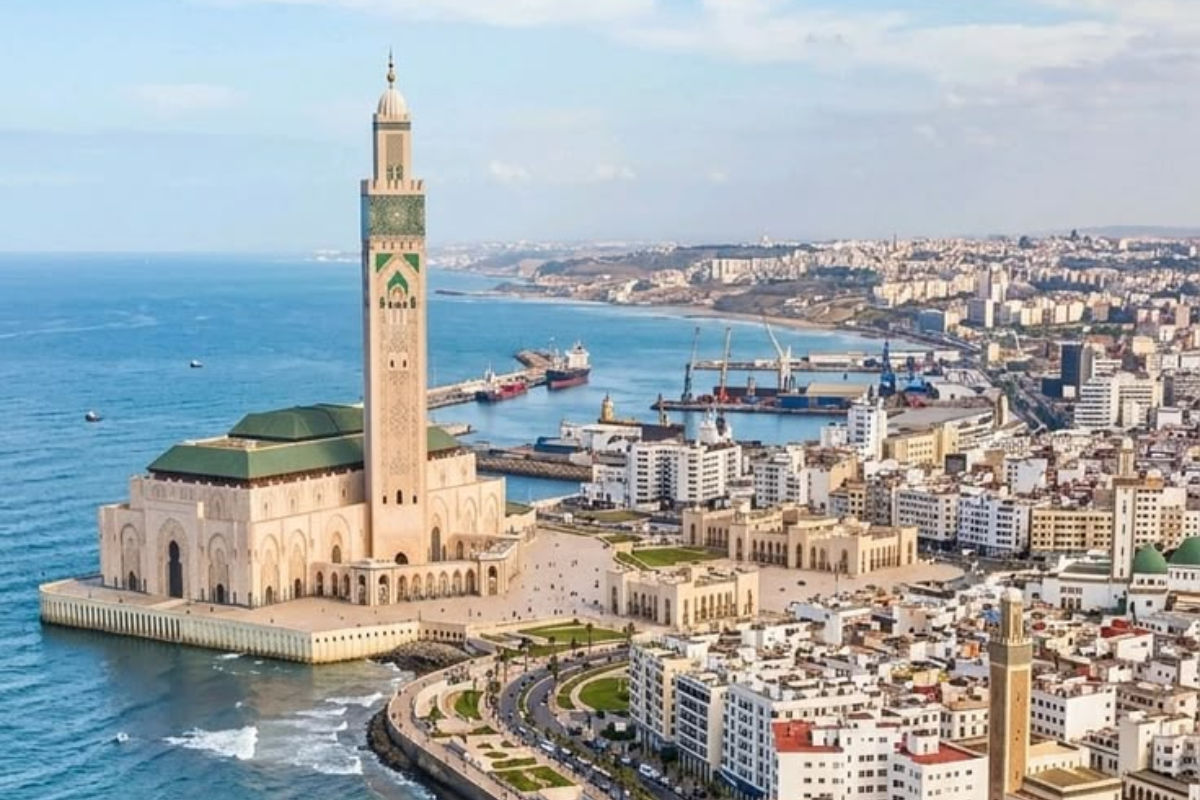
Begin in Casablanca, Morocco’s economic center and an important international gateway. The city’s essential stop on a short itinerary is the Hassan II Mosque, dramatically positioned beside the Atlantic Ocean.
Its approximately 210-meter minaret dominates the waterfront, while the building displays Moroccan craftsmanship through zellige tilework, carved wood, marble and decorative plaster. Unlike most mosques in Morocco, the Hassan II Mosque permits non-Muslim visitors inside during designated guided visits. Schedules and access conditions can change, so confirm the current visitor arrangements before your trip. Allow roughly 45–60 minutes for the visit itself, plus time for the esplanade and waterfront.
An early start is useful because Day 1 also includes Rabat and Meknes. It can also provide softer light for photography around the mosque and Atlantic-facing exterior.
Afternoon: Explore Rabat
Continue north to Rabat, around one hour from Casablanca under normal driving conditions. Morocco’s capital feels noticeably different from Casablanca: broad avenues and administrative districts sit alongside historic quarters, gardens and river views.
Prioritize three landmarks if your time is limited:
- Hassan Tower: the monumental minaret of an ambitious 12th-century mosque project that was never completed.
- Mausoleum of Mohammed V: an important royal mausoleum known for its white exterior and detailed Moroccan decoration.
- Kasbah of the Udayas: a historic fortified quarter with distinctive white-and-blue lanes and views toward the Bou Regreg River.
Rabat is particularly rewarding for travelers interested in architecture and history but who prefer a more relaxed urban experience. For lunch, Moroccan dishes such as chicken tagine with preserved lemon can work well, while seafood is another natural choice in this Atlantic city.
Evening: Continue to Meknes
From Rabat, allow approximately 1.5 hours for the drive inland to Meknes, depending on traffic and stops. One of Morocco’s historic imperial cities, Meknes can feel quieter and more manageable than larger medinas, making it practical for a short itinerary.
Depending on your arrival time and current site access, places of interest include Bab Mansour, El Hedim Square and the Mausoleum of Moulay Ismail. Restoration projects and access restrictions can affect historic monuments in Morocco, so check locally rather than building the evening around a single site.
Spend the night in Meknes. A traditional riad in or near the medina provides atmospheric accommodation and makes it easier to experience the old city before leaving the following morning.
Day 2: Meknes → Volubilis → Chefchaouen
Morning: Explore the Roman Ruins of Volubilis
Leave Meknes for Volubilis, one of Morocco’s most important archaeological sites and a UNESCO World Heritage Site. Ancient settlement in the area predates Roman rule; Volubilis later developed into an important city on the western edge of the Roman world and prospered through agriculture, including olive production.
The site is extensive and largely exposed to the sun. Among the highlights are:
- Well-preserved floor mosaics
- The Arch of Caracalla
- The basilica and public buildings
- Ancient streets and house foundations
- Open views over the surrounding countryside
An early visit is especially worthwhile in warmer months because there is limited shade. Comfortable walking shoes, water and sun protection are useful. Travelers particularly interested in archaeology and Morocco’s layered history may also prefer longer cultural routes, such as a 12-day organized tour from Fes or a 10-day Morocco trip from Fes.
Midday: Drive Through the Rif Region
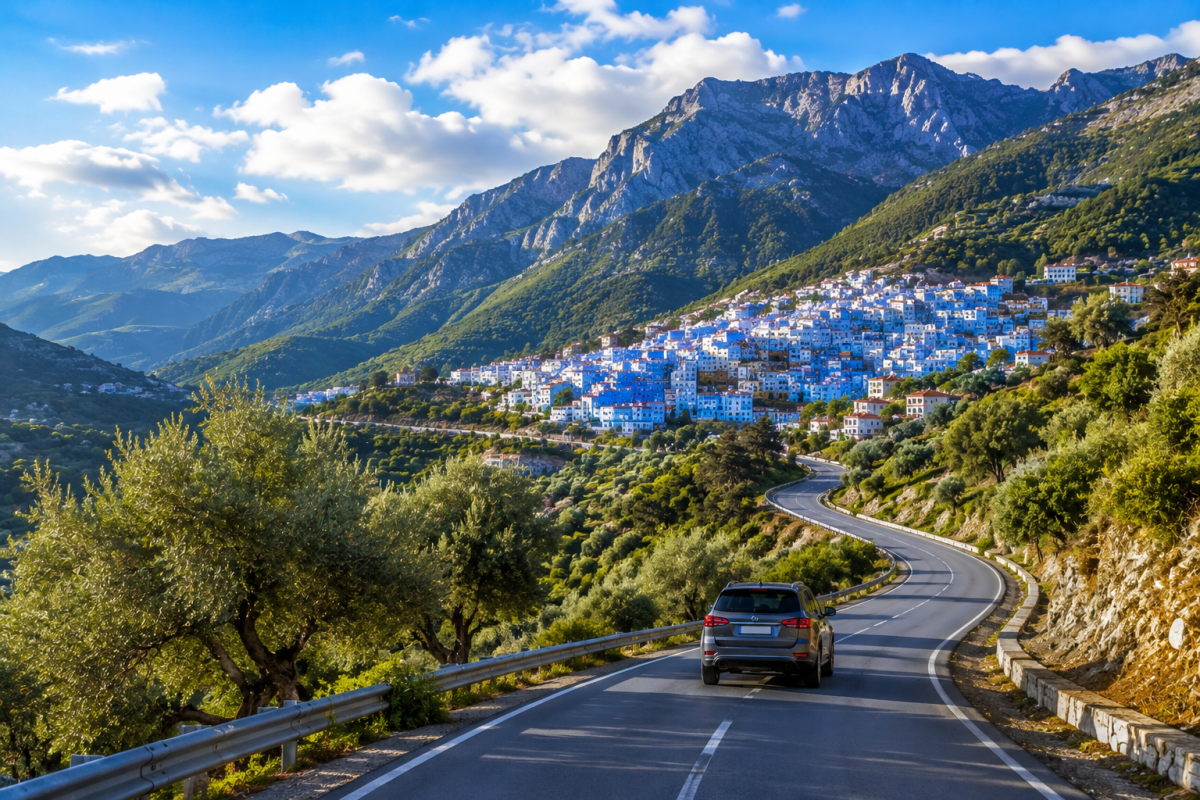
From Volubilis, continue toward Chefchaouen. The journey takes roughly three hours, although mountain roads, traffic and stops can extend travel time. The landscape changes along the way, with olive groves, agricultural land, villages and increasingly mountainous scenery as you approach the Rif.
A private vehicle or driver makes this particular four-day itinerary easier because Volubilis is less straightforward to combine with the other stops by public transportation. Travelers researching alternatives from other starting cities can compare tours from Fes, tours from Marrakech and tours from Tangier.
Afternoon and Evening: First Walk in Chefchaouen
Chefchaouen was founded in 1471 and sits against the slopes of the Rif Mountains. Its medina is famous internationally for blue-painted houses, stairways and narrow lanes, but its appeal extends beyond photography. The compact old town, mountain setting, cafés and slower rhythm make it an ideal place to spend two nights after the faster first half of the itinerary.
After checking into your riad, keep the first exploration informal. Walk through the medina, find Plaza Uta el-Hammam and enjoy dinner without trying to cover every landmark. You have the whole following day for a more detailed visit.
Day 3: A Full Day in Chefchaouen
Morning: Explore the Medina Before It Gets Busy
Start early, when the streets are generally calmer and the light works well for photography. Rather than treating Chefchaouen as a checklist, allow time to wander through the smaller lanes and residential passages while respecting private homes and local residents.
Useful stops include:
- Plaza Uta el-Hammam, the medina’s central gathering place
- The Kasbah beside the main square
- The maze of blue-painted lanes and stairways
- Small bakeries, workshops and neighborhood shops
For photographs, look beyond uniformly blue walls. Wooden doors, woven textiles, flowerpots and warm-toned details create attractive contrasts with the medina’s characteristic blue palette.
Midday: Walk to Ras El Maa
Head toward Ras El Maa on the eastern edge of the medina. The water source and its surroundings are a local gathering place and offer a pleasant change from the enclosed lanes of the old town. Small vendors may be operating nearby, making this an easy place for a break before continuing uphill or returning to the center.
Afternoon: Crafts, Food and Free Time
Keep part of the afternoon unscheduled. Chefchaouen is better enjoyed with time to stop at a terrace, browse workshops or revisit lanes discovered in the morning. Local products commonly associated with the region include woven wool goods, leatherwork, goat cheese and items made with traditional dyes.
Bargaining can be part of shopping in Morocco, but prices and expectations vary from one shop to another. A polite approach works better than treating every purchase as a contest.
Late Afternoon: Spanish Mosque Viewpoint
For a broad view over Chefchaouen, walk toward the Spanish Mosque viewpoint in the hills above town. The uphill walk commonly takes around 30–40 minutes, depending on your starting point and pace.
Late afternoon and sunset are popular because the elevated position overlooks both the medina and surrounding mountains. Wear suitable shoes and allow enough daylight for the return walk.
Day 4: Chefchaouen → Casablanca
The final day is primarily a transfer back to Casablanca. The journey generally requires about five to six hours by road, but actual travel time depends on traffic, route conditions and stops.
Leave early if you have onward plans. If you are catching an international flight, build a substantial buffer rather than planning your arrival around the minimum theoretical driving time. Unexpected road delays can turn an otherwise comfortable journey into a stressful connection.
Casablanca works well as an arrival and departure hub, but travelers with substantially more time can connect the north with additional imperial cities or other parts of the country. Another option for a longer itinerary is a 10-day Morocco circuit beginning from Tangier.
Transport: Do You Need a Car for This Route?
You can travel between Morocco’s major cities without renting a car, but reproducing this exact itinerary by public transport is less convenient because of the stop at Volubilis and the limited four-day timeframe. Trains and other public transport can cover parts of the route, while taxis or additional transfers would be required for others.
For four days, the simplest options are usually a rental car for travelers comfortable driving independently, or an organized/private transfer arrangement. A driver can remove the need to navigate, park and coordinate separate connections, while self-driving provides more control over stops.
If renting a vehicle, avoid estimating mountain driving times purely from distance. Roads approaching Chefchaouen can be slower than expected, and driving after dark may be less comfortable for visitors unfamiliar with the route.
Where to Stay During the 4-Day Trip
This itinerary works best with one night in Meknes and two nights in Chefchaouen. Staying in traditional riads gives the trip more character, although accessibility deserves attention: some medina properties cannot be reached directly by vehicle and may involve stairs or walking with luggage.
In Chefchaouen, travelers who prioritize convenience may prefer accommodation near a medina entrance, while those seeking atmosphere can stay deeper inside the old town. If arriving with a driver, confirm the nearest practical drop-off point with your accommodation beforehand.
Budget and Cost Considerations
The cost of a northern Morocco trip varies considerably according to accommodation level, transportation and whether you hire guides. An independent trip using simpler accommodation and public transport where practical will generally cost less than a private itinerary with a dedicated driver, upscale riads and guided sightseeing.
Your main expenses are likely to include accommodation, intercity transportation or a vehicle and driver, meals, attraction admission, local guides and personal shopping. Travelers choosing private 4×4-style journeys can expect a different cost structure from independent travel; a 9-day Morocco 4×4 journey illustrates the type of longer private itinerary available.
Because admission fees, accommodation prices and transport costs change, confirm current prices close to your travel dates rather than relying on an old fixed budget estimate.
Best Time to Visit Northern Morocco
Spring, from March to May, is attractive for green landscapes and generally mild conditions. It is a good season for combining cities with outdoor archaeological sites and mountain scenery.
Autumn, from September to November, can also offer comfortable sightseeing weather. Conditions vary by month and elevation, so layers remain useful.
Summer can be hot at exposed sites such as Volubilis. Starting early, carrying water and using sun protection become more important.
Winter brings cooler evenings in northern and mountainous areas, with rain possible. Pack for changing conditions rather than assuming that Morocco is warm year-round.
Northern Morocco vs. a Sahara Desert Itinerary
A northern Morocco itinerary and a desert tour deliver very different experiences. This route prioritizes Roman archaeology, imperial history, Atlantic-influenced cities and the Rif Mountains. Desert itineraries instead devote significant time to crossing southern Morocco to reach landscapes such as the Erg Chebbi dunes around Merzouga.
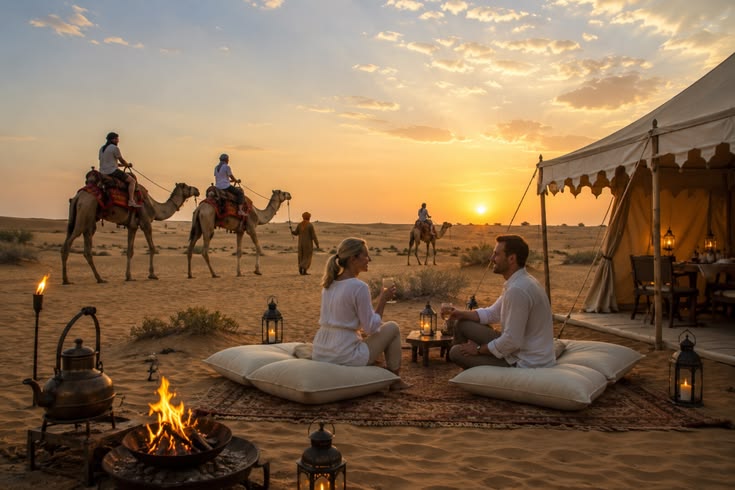
If the Sahara is your priority, compare the northern route with a 3-day Marrakech to Merzouga desert trip or a 4-day Merzouga desert excursion. Travelers with more time can consider a 7-day trip from Marrakech, 9-day Marrakech itinerary, 10-day Morocco itinerary from Marrakech or a 15-day grand tour from Marrakech.
Fes is another logical starting point for desert-focused journeys. Options range from a 3-day organized trip from Fes and 4-day Fes to Merzouga route to a 6-day tour from Fes, 7-day Fes tour, 7-day Fes to Marrakech itinerary and 8-day Morocco route from Fes.
For travelers arriving in northern Morocco by ferry or flight, Tangier can also serve as the starting point for a broader trip, including a 7-day tour from Tangier, 12-day Morocco tour from Tangier or 15-day Morocco itinerary from Tangier.
Practical Tips for a Northern Morocco Road Trip
- Start early on Days 1 and 2. These are the busiest sightseeing and transfer days.
- Carry water and sun protection at Volubilis. Much of the archaeological site is exposed.
- Pack layers for Chefchaouen. Mountain evenings can feel cooler than Casablanca and Rabat.
- Wear comfortable shoes. Medina lanes, archaeological ground, steps and the Spanish Mosque walk all involve substantial walking.
- Check monument access before visiting. Religious observances, restoration work and operational changes can affect entry.
- Keep luggage manageable. Riads inside medinas are not always accessible by vehicle.
- Leave extra time for the return to Casablanca. A same-day flight connection should never depend on an ideal driving time.
Is Northern Morocco Safe for Visitors?
Northern Morocco is a well-established tourism region, but normal travel precautions still apply. Protect valuables in busy places, use reputable transportation, take care when walking after dark in unfamiliar areas and follow current local or government travel advice.
Road safety also matters on this itinerary. Avoid rushing simply to complete every listed attraction, particularly on winding roads near the Rif Mountains. If a day falls behind schedule, reducing sightseeing is preferable to turning a scenic itinerary into a race.
Planning a Longer Morocco Trip
Four days works well for Casablanca, Rabat, Meknes, Volubilis and Chefchaouen because the route remains geographically focused. With additional days, you can travel more slowly or include destinations farther south.
Travelers interested in a mix of urban sightseeing and outdoor landscapes can also explore specialist options such as a 3-day Marrakech mountain tour. When researching operators and trip styles, the site’s broader Morocco tours and Marrakech excursions provide alternatives to this northern itinerary.
It is also useful to learn about the destination before choosing a route. The Morocco travel information section provides broader context, while the About Us page can help travelers understand the tour provider behind the itineraries. The Discovering Morocco Travel homepage provides access to the site’s complete range of travel options.
Frequently Asked Questions
Is four days enough for northern Morocco?
Four days is enough for this focused Casablanca–Rabat–Meknes–Volubilis–Chefchaouen route, but the pace is relatively quick. The itinerary works because the first two days combine sightseeing with transfers and Day 3 is dedicated entirely to Chefchaouen. Travelers who prefer slower mornings and more in-depth city visits should add extra days.
Can you visit Casablanca, Rabat and Chefchaouen in four days?
Yes. Adding Meknes and Volubilis is also feasible with efficient transportation, although it creates two active days at the beginning of the trip. A private vehicle or carefully coordinated transfers make the complete route significantly easier.
How long should you spend in Chefchaouen?
Two nights with one complete day is a good fit for this itinerary. It gives you time for the medina, Ras El Maa and the Spanish Mosque viewpoint without treating Chefchaouen as a brief photo stop.
Is Volubilis worth visiting on the way to Chefchaouen?
Yes, particularly for travelers interested in Roman history, archaeology and ancient mosaics. Its countryside setting also provides a useful contrast with the imperial cities and Chefchaouen. On a four-day trip, it fits most naturally between Meknes and Chefchaouen.
Should I choose northern Morocco or the Sahara for a four-day trip?
Choose northern Morocco if you prioritize historic cities, Roman ruins, mountain scenery and Chefchaouen. Choose a desert-focused itinerary if reaching the dunes is your main goal and you are comfortable with longer periods on the road. Trying to combine both regions in only four days would create an unnecessarily rushed journey.
Is a 4-Day Northern Morocco Trip Worth It?
For travelers with limited time, this route offers an unusually varied introduction to Morocco. In four days you can see Casablanca’s Atlantic landmark, Rabat’s historic monuments, the imperial heritage of Meknes, Roman remains at Volubilis and the blue medina of Chefchaouen.
The itinerary succeeds by staying focused rather than attempting to cover the entire country. Plan early departures for the first half of the journey, allow realistic time for road travel and preserve the full third day for Chefchaouen. That balance turns a short northern Morocco trip into a manageable journey rather than a sequence of hurried stops.